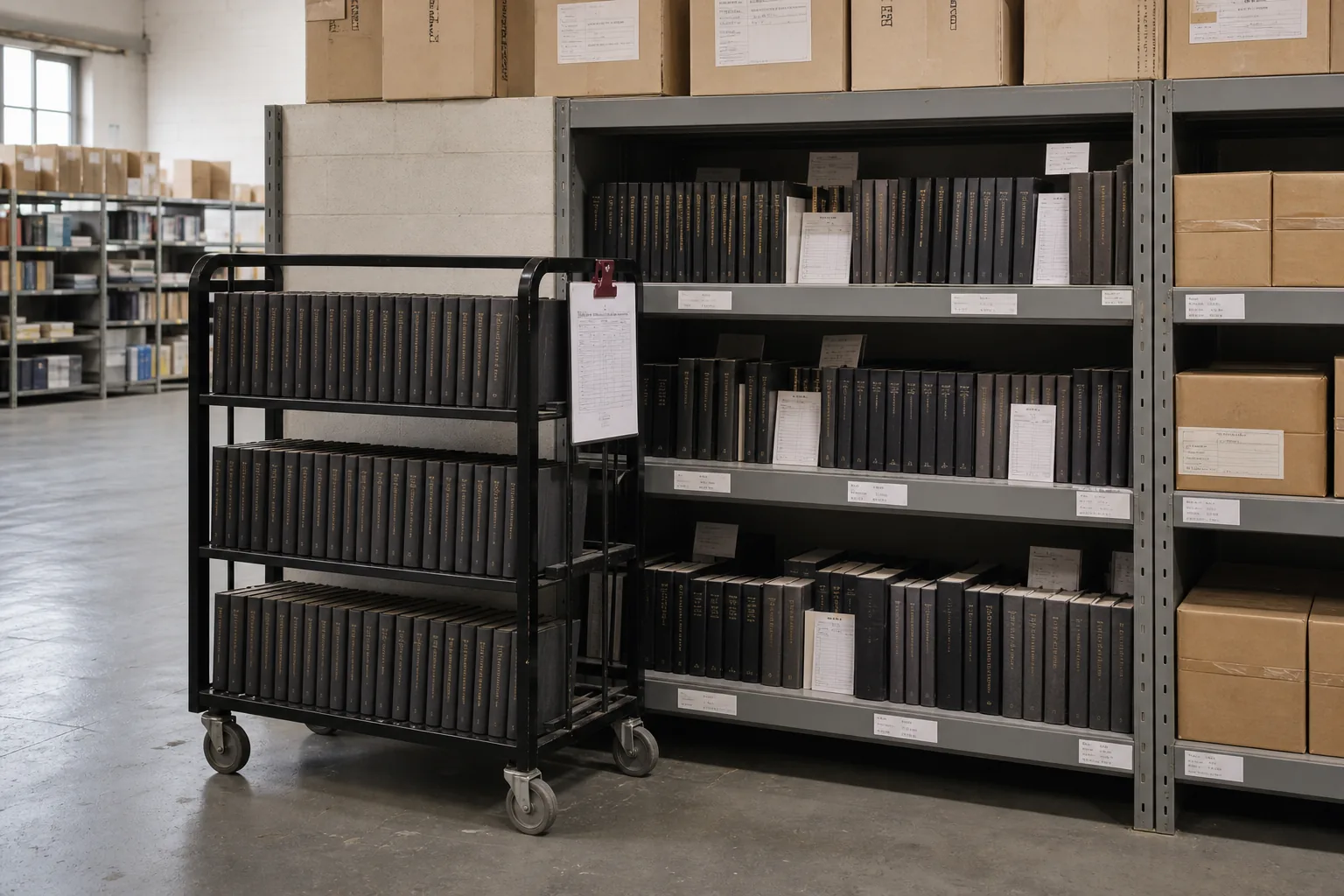
There’s a cheerful little theory of the banned book.
A board removes a title on Tuesday. The internet buys it on Wednesday. Everyone concerned with the book’s prospects retires to a chaise longue upholstered in righteous irony.
It’s a theory with one very good photograph.
It has almost no floodplain.
A challenge can make you a spectacular splash in retail.
It can also close the shallow channels through which a title gets found again and again.
The school-library shelf.
The patron-facing app. The hold queue.
The circulation history a selector reads before buying your next book.
Retail noise and recurring access are different waters.
The fact that one rises does not refill the other.
None of which argues that a sale at a bookstore is less real than a loan.
It argues against letting a dramatic wave stand in for the whole watershed.
Assessing a challenged title, you need two ledgers.
One records visibility, sales, rankings, and press.
The other records availability, restrictions, copies or licences, checkouts, renewals, holds, and the selection evidence those uses create.
Put them together too early and the flood does your accounting for you.
Here is how to inspect the dam.
Inspect the valve
The first mistake is wonderfully efficient.
Call every objection a ban. Move straight to the splash.
But an informal complaint in a hallway, or during school-board public comment, is not ordinarily a formal challenge.
The formal valve is a written request for reconsideration.
It usually asks for the title, the disputed section, whether the complainant has read the full work, and a requested remedy. Relocation, parental-permission restriction, or outright removal.
That paperwork matters because a district’s tracked-challenge count generally reflects completed forms, not every public objection.
It also tells you what has actually entered the pipe.
A request can end with the book retained, restricted, or removed.
Challenge, restriction, and removal are not interchangeable.
Nor is a curriculum decision necessarily a library decision. The 1982 Pico ruling constrains removal of an already-shelved school-library book for viewpoint reasons, while leaving acquisition and curriculum choices far less guarded.
So the diagnostic is not whether somebody objected.
It’s: what procedure turned a challenge into a removal?
Read the form.
Read the current selection policy.
Read whether the decision belongs to a committee, an administrator, or the board.
A record saying removed from ninth-grade reading has not told you a library copy was removed.
Those are different outlets on the same map.
And there’s a useful procedural clue in the stated standard.
A reconsideration committee, usually librarians and teachers, sometimes with parent or student representatives, reads the full work and applies the existing collection-development policy. Not the complainant’s preferred literary weather.
Policy language holding that materials should not be removed for partisan or doctrinal disapproval does real hydraulic work when it is already written down.
It’s a constraint on a decision.
Not a decorative sandbag.
Watch the dry period
The title’s status while review is pending is the smallest label with the largest practical consequence.
Some policies keep it fully circulating.
Others pull it from circulation.
A review can run for weeks. If it runs through a school term or past its end, a supposedly provisional removal denies access to every student who needed the book in that window.
Pending is not a puddle.
It’s the channel closed for the season.
The national outcome data correct two opposite fantasies at once.
A review of nearly nine hundred challenges found close to half returned titles to the shelf unchanged, while roughly one in six ended in some form of restriction.
Retain is the most common single outcome.
Which does not make the closed-pending period irrelevant, and does not make every formal request a permanent removal.
Your ledger needs all three fields.
Pending access. Final outcome. Appeal.
Most disputes never reach court.
A losing complainant can usually appeal to a superintendent and then a school board, or to a library board, and most formal reconsiderations end inside that district ladder.
The 2023 federal suit against a Florida school district, brought by a free-expression organisation, a major publisher, authors, and parents over a pattern of removals, is useful precisely because it is not the ordinary plumbing.
Litigation appears when pattern and scale justify a national organisation and a publisher spending the water needed to breach a dam.
Not because every one-book decision has become constitutional theatre.
For a young-adult list, that distinction is commercial before it is rhetorical.
Your locally retained title keeps being encountered by students, and keeps collecting circulation evidence.
A pending pull, a restriction behind a desk, and a removal from the catalogue each alter access differently.
No retail rank will tell you which one occurred.
Keep the splash in its own ledger
The stereotype says a ban always sells books.
A better slogan than analysis, which is why it keeps being invited onto panels.
The documented version is narrower and far more interesting.
When a Tennessee school board voted unanimously in January 2022 to pull Maus from its curriculum over profanity, violence, and nudity, the book reached number one overall at the largest online retailer within days.
At points the following day it held the top two positions there, and it appeared on two other retailers’ bestseller lists in the same window.
That’s a measurable retail surge, produced by national attention.
It is not evidence that your challenged title will receive national attention.
And it is not a substitute for a school-library copy.
The most-challenged title of three consecutive years supplies the careful companion case.
Its author has said sales increased after the challenges.
No public unit figure exists.
That absence is instructive.
A responsible retail ledger can record that demand rose without inventing the amount, just as it can record a ranking spike without pretending a ranking measures access.
The flood is visible.
Its depth is not always published.
And there is one more missing measure, sitting upstream of every available chart.
Self-censorship.
You decline to acquire a manuscript because anticipated controversy makes the meeting expensive, and no title then exists to sell, borrow, rank, or defend.
A cancellation after contract is visible: one major house dropped a senator’s book in January 2021, and another publisher picked it up eleven days later.
Ordinary non-acquisition is not visible at all.
A dry tributary does not issue a press release.
Does the floodplain have a collection?
Now run two hypothetical young-adult books from your list through both ledgers.
The North Window is challenged in a district, pulled pending review, and then removed. The decision attracts online commentary, and retail attention rises.
The Lark House attracts comparable online attention and remains in circulation under the district’s policy.
No inference about either book’s prose, politics, or moral worth follows from any of that.
The difference is reach.
The retained book is still available for a physical checkout, a renewal, a hold request, and a local recommendation.
Its usage enters the collection-development cycle. Assessing user needs, setting policy, selecting, acquiring, weeding, evaluating.
In practice, selectors read professional reviews, circulation of comparable titles, and patron holds placed before a title is even owned.
The book with no access cannot supply you that same local stream of evidence, for a sequel or for an adjacent acquisition.
Which is where libraries are just free retail gets its tiny rubber dinghy punctured.
Many public and academic libraries run an approval plan. A wholesaler ships or flags titles against a preset subject, price, and publisher profile, and the selector accepts or returns them against demand data.
Library circulation is not your lost sale recorded in a different hat.
It’s one of the inputs shaping the next selection.
So a challenge can produce a sharp retail event while removal closes a repeated discovery channel whose consequence arrives later, in the next buy.
Track your physical and digital channels separately too.
Print arrives through a library wholesaler with cataloguing and processing.
The library owns that copy, and can lend it as long as the binding survives.
Digital titles arrive through a platform, and the library owns no file at all. It licenses simultaneous-use slots, for a duration or a checkout count.
One-user-at-a-time digital licensing deliberately recreates scarcity.
Which is why an app can show a hold queue as plainly as a shelf shows a gap.
Can the water keep running?
A circulation count is not an applause meter.
It’s an acquisition instrument.
Once a title is live, checkouts, renewals, hold-queue depth, and platform usage feed a later decision. Buy a similar book. Acquire the sequel. Renew the licence. Let it lapse.
A print copy is owned.
A metered or time-limited ebook is a recurring decision wearing the costume of availability.
Which makes the capacity question uncomfortably literal when a challenge-driven burst hits the hold queue.
A surge in demand for a licensed title is a surge in renewal obligations, arriving against a materials budget that was set before anybody had heard of the challenge.
And collections are frequently the line a system can narrow fastest under budget pressure.
So a title whose demand arrives as a licence-renewal obligation meets that narrowed channel at precisely the wrong moment.
Interlibrary loan is the spillway. It is not the original riverbed.
When a title was never selected, has been weeded, or cannot be relicensed, it can still be borrowed through a national network.
That replaces acquisition dollars with turnaround time, staff processing, and a share of infrastructure cost.
Genuine access.
Not the same thing as immediate local discovery in a catalogue or an app.
Read both ledgers
The checklist is deliberately unglamorous.
Several of these should be true before anyone declares that a challenge has helped a title:
- The record distinguishes an informal objection, a written request for reconsideration, a pending pull, a restriction, and a final removal.
- The collection policy and the appeal route have been read, including the difference between curriculum and library access.
- Retail sales, rankings, and press sit in one ledger. Availability, copies, licences, circulation, renewals, and holds sit in another.
- Print ownership and digital licence terms have been separated, rather than called generic copies.
- You have tested whether a demand shock requires multiple simultaneous-use licences, and whether a materials budget can sustain later relicensing.
- The next-selection effect is being watched: comparable circulation, patron holds, approval-plan fit, sequel demand, interlibrary substitution.
And the ambiguous case is the one worth reporting honestly.
Retail demand rises where access is removed.
That’s not a paradox to resolve by choosing the prettier graph.
Report both ledgers.
State the retail event.
State the circulation loss, or the restriction.
State what you cannot measure, including the books nobody acquired.
Then decide what market position remains viable through the channels that still run.
Censorship can indeed make a splash.
Sometimes the splash is loud enough to sell books downstream.
But a floodplain lives on the water that keeps reaching it. The shelf, the app, the hold, the renewal, the next selector’s evidence.
The splash shows. The lost water matters longer.